
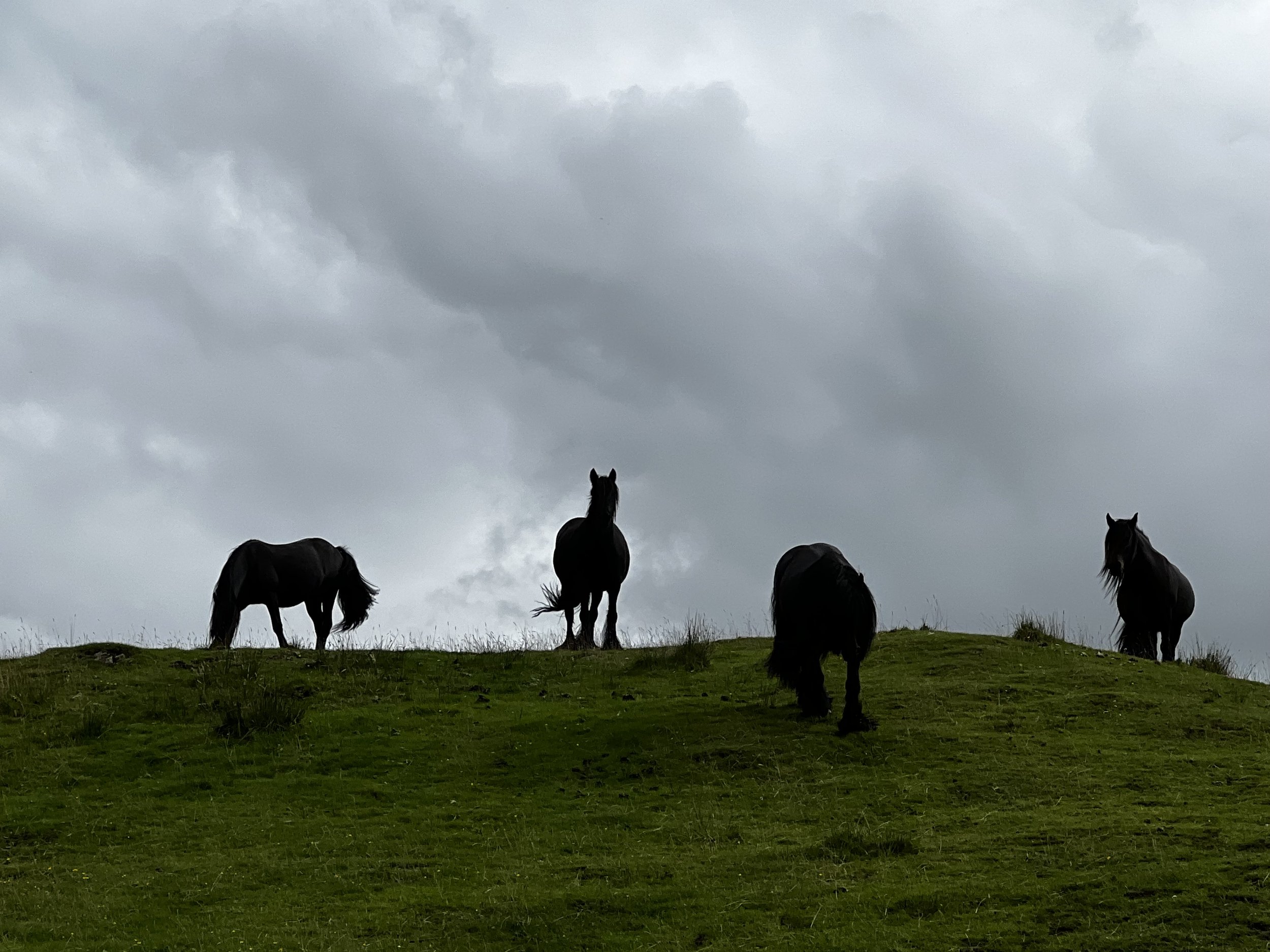
The cautious guest
who comes to the table speaks sparingly.
Listen with ears,
Learn with eyes.
Such is the seeker of knowledge.
~The Havamal, a Viking poem
©2026 Jane Snar
Fell Pony History
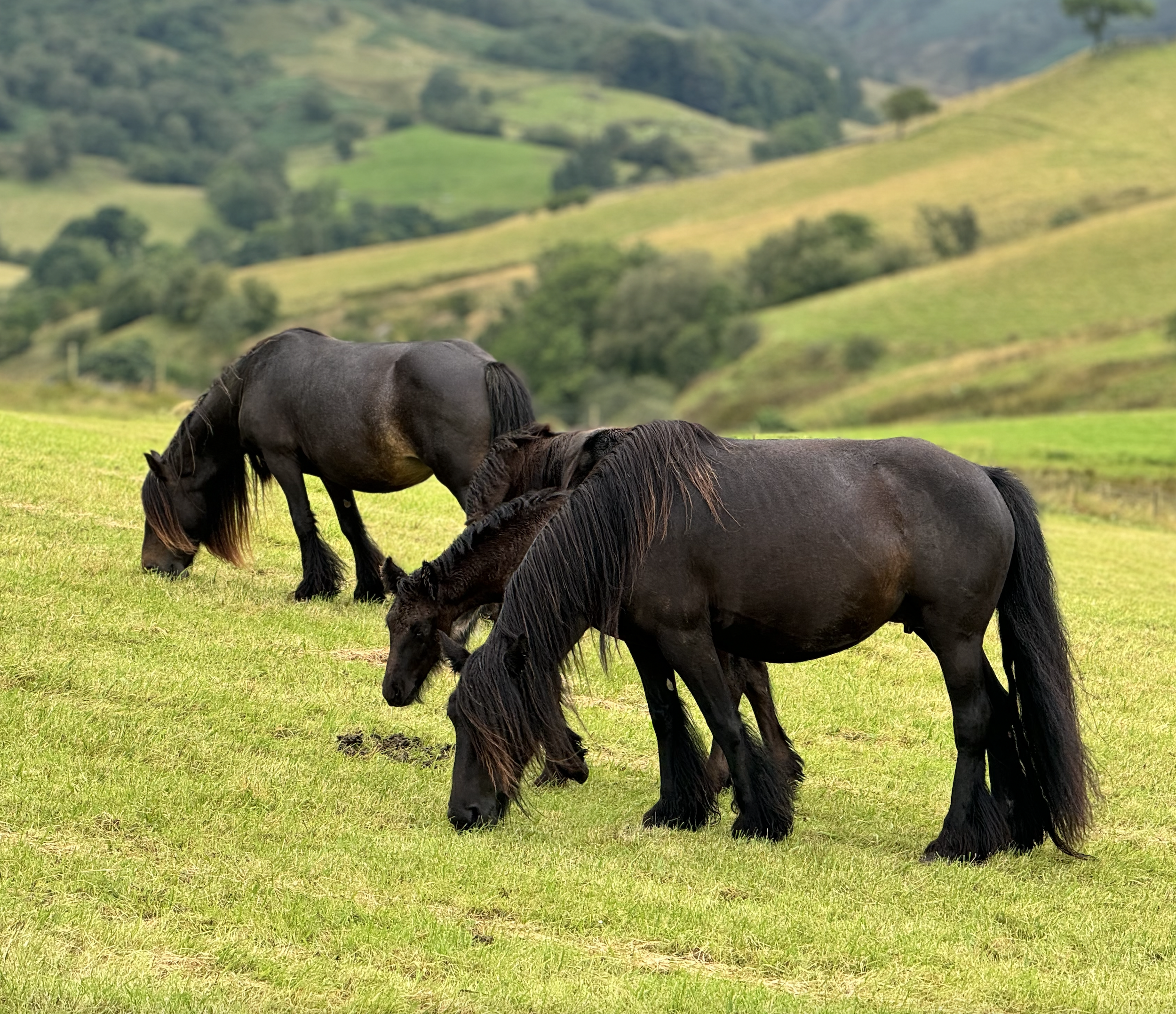
Fell Ponies originate from Cumbria in Northern England, where the word fell refers to the open upland hills and moorland that shape the region — a term rooted in Old Norse and distinct from modern geographic classifications.
Descended from the now-extinct Galloway pony, with roots reaching back to the Iron Age, the Fell Pony developed as a strong, adaptable working pony. Over centuries, they were relied upon for pack work, driving, shepherding, and general farm labor, earning a reputation for stamina, intelligence, and reliability as a true all-around pony.
Fell Ponies should not exceed 14 hands and are compact and powerful without heaviness. Strength is supported by flat bone below the knee rather than round, contributing to durability and long-term soundness. Their bodies are deep and well coupled, with strong backs, muscular loins, and square, powerful hindquarters suited to sustained work over distance.
The head is small and well defined, with a broad forehead tapering to the nose. Large, open nostrils are a functional adaptation, helping warm and regulate air in cold, exposed conditions. Bright, intelligent eyes and neat, well-set ears give the Fell its alert yet kind expression. The neck is strong and of good length, blending smoothly into well-laid-back shoulders that allow for efficient, comfortable movement.
Legs are straight and well placed, with good joints. Feet are round, well formed, and open at the heels, often showing the characteristic blue horn. Movement is purposeful and efficient, with a ground-covering trot that emphasizes forward reach and endurance rather than an exaggerated up-and-down action.
Mane and tail are left full and flowing, with fine feathering at the heels that may shed seasonally. Traditional colors are black, brown, bay, and grey. Chestnuts, as well as piebald and skewbald ponies, are registered in Section X. Minimal white markings are preferred, preserving the classic appearance of the breed.
Historically valued for strength, steadiness, and willingness, the Fell Pony remains true to its reputation today. In modern settings, Fells are dependable trail partners and are often suitable mounts for beginners, known for their calm, sensible nature and rider awareness.
They work happily under saddle or in harness and are also well suited to therapy and ambassador roles due to their patience and kindness.
Above all, the Fell Pony is constitutionally hard as iron — tough, capable, lively, and alert — with unmistakable mountain pony character shaped by land, work, and time.
Modern Day Uses: The Fell Pony Today
Today, the Fell Pony remains a truly versatile, all-round family pony, suitable for both adults and children. As a hack and general riding pony, the Fell’s fast, purposeful walk and easy, balanced paces make it a comfortable and enjoyable ride. Their natural sure-footedness allows them to travel safely across rough, uneven ground, where lighter-built ponies may struggle. Many owners note the Fell’s strong sense of self-preservation and judgment, appearing to instinctively choose the soundest footing through marshy ground or the safest route across rocky terrain.
These qualities have made Fell Ponies valuable for hippotherapy programmes, where their steadiness, patience, and reliability are especially prized. Their calm, thoughtful nature also lends itself well to liberty work, where trust, responsiveness, and willingness are essential.
Fell Ponies are capable and willing jumpers, particularly across country, where their agility and clever footwork shine. They regularly perform well in working hunter classes, Pony Club activities, and performance trials designed to test stamina, balance, and courage over varied natural obstacles. In more recent years, Fells have also excelled in disciplines such as Working Equitation and Mountain Trail, where their balance, trainability, and problem-solving ability are showcased.
Driving remains one of the Fell Pony’s most traditional and enduring roles. With the resurgence of recreational and competitive driving, the breed continues work it has done for centuries. Their strength, soundness, and stamina make them well suited to both single and pair driving, and their consistency of type allows for well-matched pairs.
Fell Ponies also participate in endurance riding, traditional trotting races in Cumbria, and modern disciplines such as dressage and TREC. They continue to perform practical work, including light forestry, farm and shepherding duties, and conservation grazing, where their hardiness and ability to thrive on sparse forage are valuable assets. They are also used to transport equipment for maintaining walking routes, and in some areas of the UK are still employed carrying panniers down from the moors during stag and grouse seasons.
Fell Ponies are employed in riding and trekking establishments, valued for their sensible nature, adaptability, and manageable size. Across all these roles, the Fell Pony remains true to its heritage — hard as iron, dependable, and willing — combining toughness with kindness and versatility in a way few breeds can match.
Works Cited
Fell Pony Society. About Fell Ponies, The Fell Pony Society, updated 2 April 2022, https://www.fellponysociety.org.uk/about_breed.htm
A Timeline for the Fell Pony
Pre-historic era: Predecessors of the Fell pony roamed the North of England mostly in Cumbria (1).
Iron Age (500 BC): Mostly resembled the Exmoor pony, with a slightly shorter build and were in common use in Britain by this time (1).
Roman Occupation (55 BC - 40s AD): Height increased (1).
Viking Age (793–1066 AD): Ponies were used to pull sledges, plough, ride, pack (1).
11th and 12th centuries: Long distance pack work carrying woolen goods, fresh food, preserves, metal ores and to hunt wolves that would attack flocks of sheep (1).
13th century - 18th century: Ponies were utilized for mass merchandise and imported goods transport in pack trains over long distances (1).
Mid 18th century to the mid 20th century: Some Fell ponies may have worked in coal mines following the death of 26 children. At that time, women and children under 10 years old were no longer permitted to work in the mines and equines took their place. The last surviving pit pony was named, “Tony” and lived to 40, dying in 2011 (3). Trotting races amongst ponies was more popular than thoroughbred racing in the 1880’s and Fells excelled at a good paced trot on level paths of up to a half mile (4).
20th century: In 1922 the The Fell Pony Society was formed in its modern form with the goal of preserving the “old type” of pony (1).
Mid-twentieth century: Driving becomes popular with affluence with the Fell pony (1).
21st century: Fells still present themselves as they have throughout history: for driving, as pack ponies, trotting races (1). And in new roles in the forestry services, conservation grazing (5), riding, endurance and as agile hunter/jumpers (1). Their sure-footedness and good judgement make them a safe mount.
1. The Fell Pony Society. (2018). Early history. Retrieved from http://www.fellponysociety.org/about_breed.htm
2. Edwards, E. H. (1992). Leading the field: British native breeds of horses & ponies. London, Stanley Paul & Co. ltd.
3. Last Northcumberland pit pony passes away (2011, July 21), Evening Chronicle. Retrieved from http://www.chroniclelive.co.uk/news/north-east-news/last-northumberland-pit-pony-passes-1401845
4. The Fell Pony Museum. (2018). Trotting ponies. Retrieved from http://www.fellponymuseum.org.uk/fells/19clate/19thc2.htm
5. Friends of the Lake District. (2018). Meet the Fell ponies. Retrieved from https://www.friendsofthelakedistrict.org.uk/News/meet-the-fell-ponies-helm-2015
To learn more
Visit the Fell Pony Society
Visit the Fell Pony Museum
Films about Fell Ponies
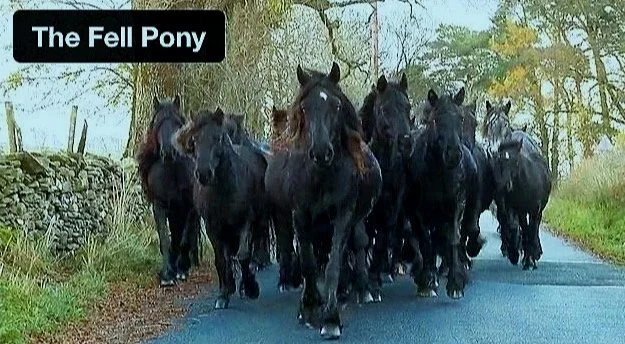
The Fell Pony
Enjoy this short, but lovely film about Fell pony type and conformation created for the Fell Pony Society in the 2022 Centenary year (100 year anniversary).
By Dreamtime Films, Tom Lloyd
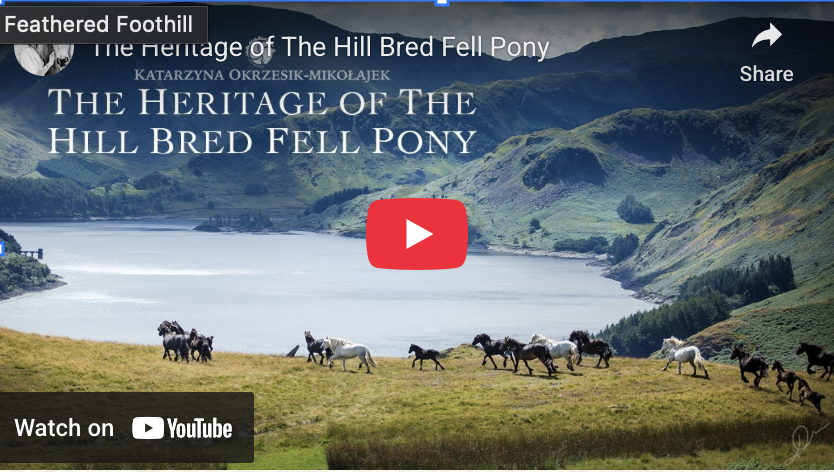
The Heritage of The Hill Bred Fell Pony
A film by Katarzyna Okrzesik-Mikolajek / Fell Pony Heritage Trust, featuring the Drybarrows Fell Ponies
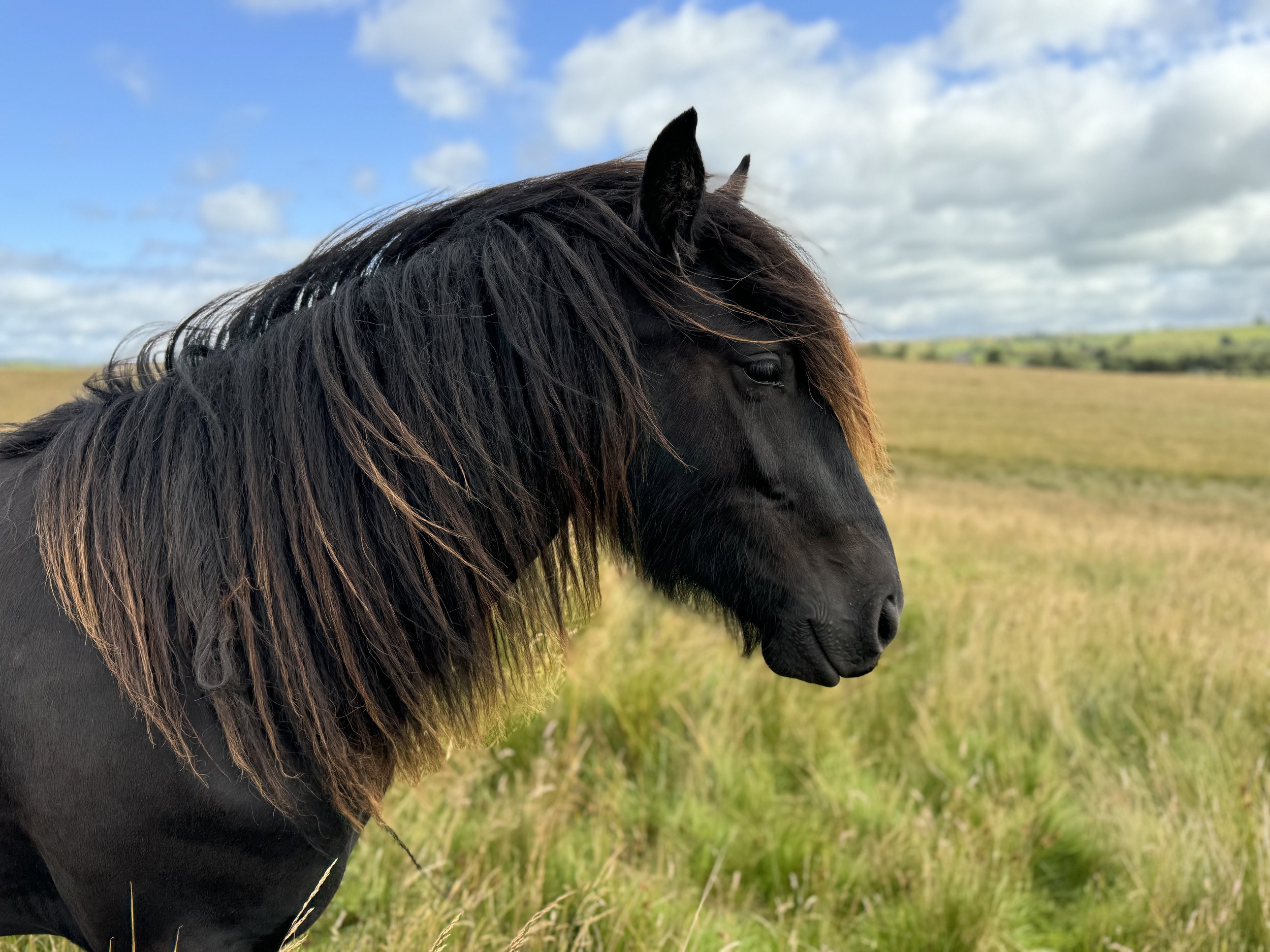
Fell Pony
At one with your surroundings,
Surefooted around crags and bogs,
Hardy in all weathers,
long dark mane, forelock and tail protecting.
You know the sheltered places,
ghylls, whin bushes, below the wind, out of the storm.
Grazing amongst the bronzed bracken patchwork
Your bright bay coat shines in the autumn light.
I shout - Head up, ears alert,
You hear the distant call.
Will you come?
Ralfland …. you bear the name of the ground you tread,
Turning tail you follow the herd
Galloping up and over Tailbert Rigg,
Today you choose to remain there.
© Janet Wood June 2023
—Wordsworth Writers Group: inspired by our 'Our Common Heritage' exhibition during its display at The Old Courthouse in Shap.
Video clip of the Bybeck herd, Cumbria, 2019 ©2026 Jane Snar